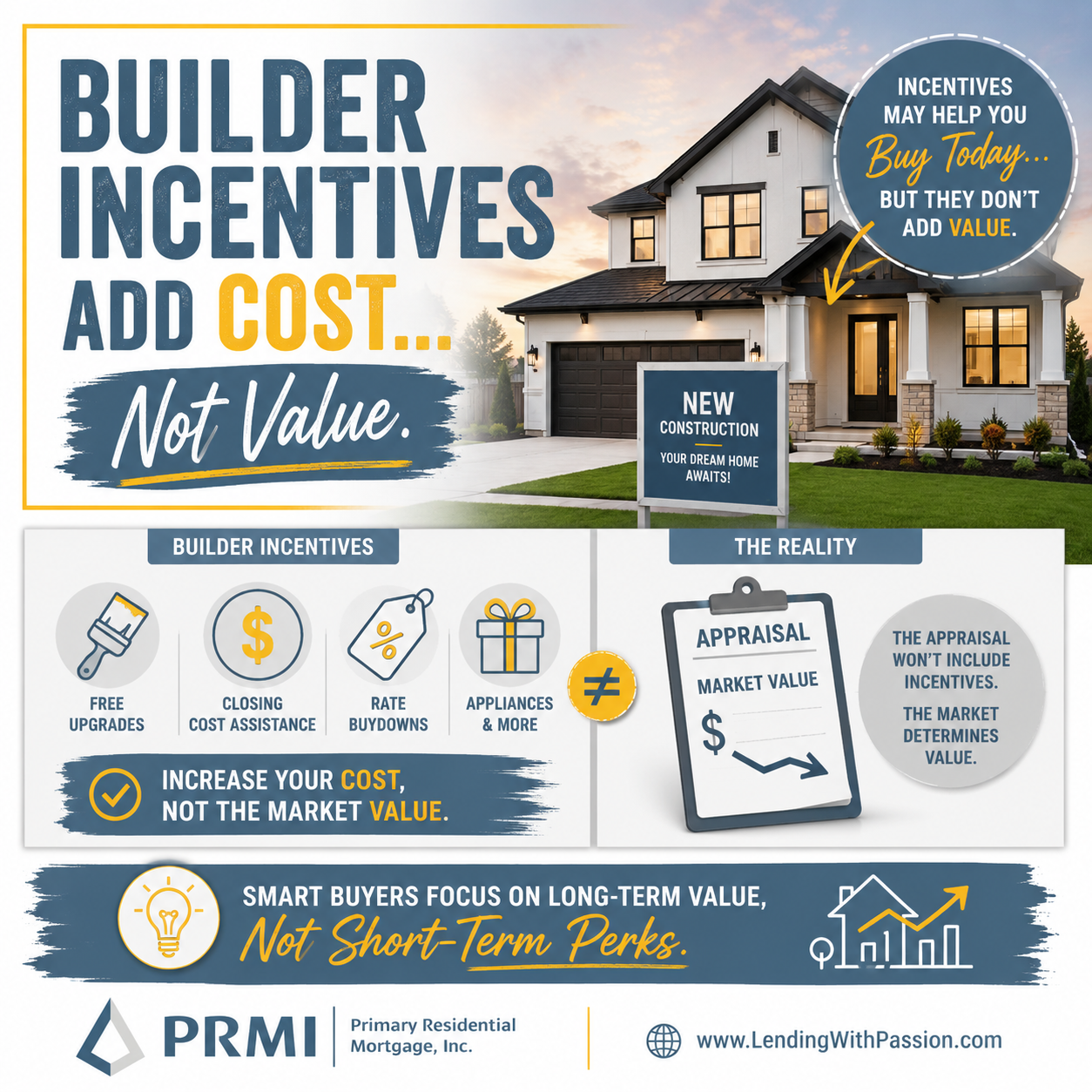

Builder incentives have become one of the biggest selling points for new construction homes. Lower interest rates, closing cost assistance, appliance packages, design upgrades, and temporary rate buydowns can make a brand-new home look incredibly attractive.
And in many cases, they are.
But before you sign on the dotted line, it's important to understand something many buyers don't realize:
Builder incentives can increase the total cost of your purchase without necessarily increasing your home's future value.
That doesn't mean buying a new construction home is a bad decision. It simply means you should understand the long-term implications before making one of the biggest financial decisions of your life.
Why This Matters
I've been discussing this with buyers and real estate professionals for years, especially when it comes to purchasing homes in large, expanding subdivisions on the outskirts of growing cities.
Builders often use generous incentives to encourage buyers to purchase homes in communities that are still developing. These incentives can include:
- Temporary mortgage rate buydowns
- Closing cost assistance
- Free upgrades
- Design center credits
- Appliance packages
- Other financial concessions
While these perks can reduce your upfront costs or monthly payment, they don't necessarily increase what your home will appraise for later.
When the Reality Shows Up
Many homeowners don't discover this until years later when they try to refinance or sell.
A common example is when a temporary rate buydown expires and the homeowner wants to refinance into a lower payment. If the home's value hasn't kept pace with the purchase price, refinancing may become difficult—or impossible without bringing cash to closing.
The same challenge can arise when it's time to sell.
Real Estate Is Still About Supply and Demand
Like any commodity, home values are largely driven by supply and demand.
Communities surrounded by undeveloped land often have room for continued expansion. As builders continue constructing new homes nearby, buyers have plenty of choices.
That creates competition for existing homeowners trying to sell.
On the other hand, established neighborhoods with limited opportunities for additional development often experience less competition from brand-new inventory.
While every market is different, it's an important factor buyers should consider.
Builder Incentives Can Affect Future Resale
Another factor many buyers overlook is how builders finish out a neighborhood.
As a community nears completion, builders frequently offer larger discounts and even stronger incentives to sell remaining inventory.
Those final sales often become comparable sales (comps) used by appraisers for future refinancing and resale values.
Now imagine you're selling your two-year-old home.
A buyer can choose between:
- Your home
- A brand-new home a mile away
- A builder warranty
- Similar pricing
- And $15,000-$25,000 in builder incentives
That's a difficult comparison for many resale homes.
Does This Mean You Should Never Buy New Construction?
Absolutely not.
New construction can be an excellent choice.
Many buyers love the ability to personalize finishes, enjoy modern floor plans, receive builder warranties, and move into a home that has never been lived in.
The key is simply understanding the potential trade-offs.
Some communities appreciate very well over time.
Others may take longer because new inventory continues entering the market.
Neither is inherently right or wrong—it simply depends on your goals and expectations.
A Strategy Worth Discussing
If you're interested in a new construction home, consider asking the builder whether some incentives could be converted into a purchase price reduction instead.
Why?
A lower purchase price may benefit you long after closing, while certain incentives disappear once you've moved in.
Temporary interest rate buydowns, for example, eventually expire.
Your lender can help estimate the value of those incentives and explain how they compare to a lower purchase price over time.
In some situations, keeping seller-paid closing costs while negotiating a price reduction for other incentives may provide a stronger long-term financial position.
Every builder is different, but it's always worth asking.
Surround Yourself With Advisors Who Put You First
Buying a home is one of the largest financial decisions most people will ever make.
Before committing to a builder community simply because the incentives look attractive:
- Compare both new construction and resale homes.
- Ask questions about long-term resale value.
- Understand how today's incentives could affect tomorrow's refinance or sale.
- Work with experienced professionals who will help you evaluate all of your options.
Builder incentives aren't inherently good or bad. They're simply one piece of the overall financial picture.
The smartest buyers look beyond today's incentives and make decisions that position them well for years to come.
Final Thoughts
Builder incentives can be valuable—but they shouldn't be the only reason you choose a home.
Look at the entire investment, not just the short-term savings.
If you're considering a new construction home, we're happy to help you evaluate the financing options, explain how different incentive structures work, and connect you with experienced real estate professionals who will help you make the decision that's right for your goals.
A little planning today can help protect your investment tomorrow.
Jay Atterstrom
📧 [email protected]
📞 (214) 377-0033